# **How to Ensure Construction Site Productivity?**
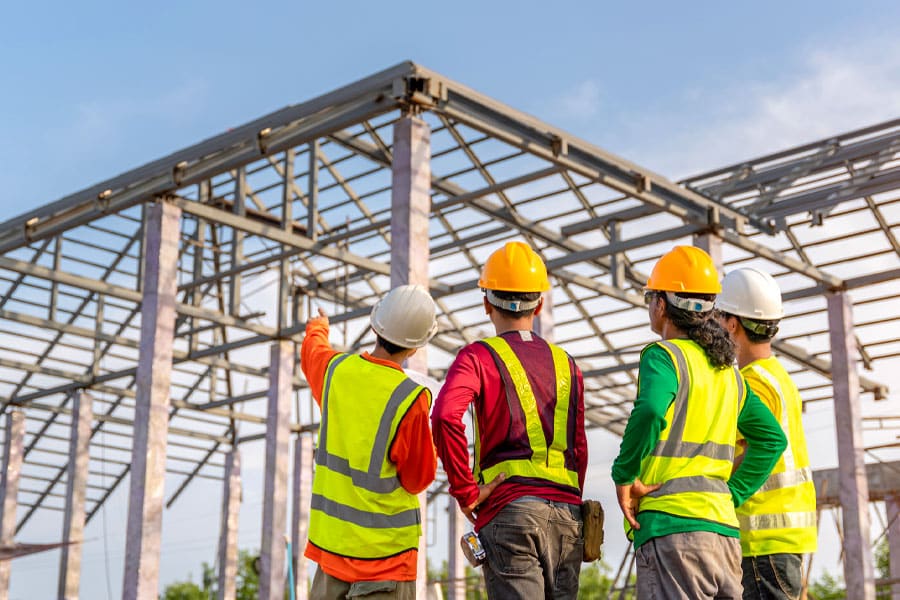
Construction site productivity improves when projects are planned well, teams communicate clearly, and resources are managed efficiently to reduce delays and rework. In simple terms, it means getting more quality work done in less time using the same labor, materials, and equipment.
In the United States, construction productivity quite frequently would mean survival in the industry for many businesses or, conversely, would make their downfall. Contractors who rely on [accurate takeoff services](https://kellyestimating.com/services/construction-takeoff-services/) during the estimating phase are better positioned to control costs, reduce material waste, and avoid last-minute surprises that slow down job progress.
In today's world, the competition level in construction has significantly increased, and hence, mere physical work on-site is no longer enough for a company to claim that it has won. In reality, the whole thing is made up of smart planning, using digital tools, and getting things done in a disciplined manner right through the project.
# **Construction Productivity**
Efficiency is the key to production in construction, which means how well a project can change inputs such as work hours by the workforce, materials, and machinery into the desired output. The most common way of calculation is probably comparing the amount of work output per labor hour or the speed at which the task is done with the schedule planned.
At present, US construction production is affected by the availability of the workforce, weather, state and local laws, and how well the supply chain operates. Delays and cost overruns are the consequences when any one of these factors is mishandled, be it intentionally or not.
# **Why Productivity Matters in Construction in the US**
Productivity is the single most effective element that fuels a contractor's business in the US, as it has a direct bearing on both their bottom line and customers' happiness. A project that is completed according to the schedule usually results in gaining a higher level of trust and getting more business from the same clients.
Among other things, low productivity usually causes::
| Issue | Impact on Project |
| -------- | -------- |
| Delays| Extended timelines and penalties |
| Rework| Increased labor and material costs |
| Poor coordination| Miscommunication between trades |
| Idle labor| Wasted payroll expenses |
Boosting productivity is one of the main ways that contractors can keep their cost competitiveness when bidding and, at the same time, still earn a reasonable profit margin even in a construction market with limited supply.
# **Pre-Construction Planning**
Developing a solid productivity foundation even involves work before construction actually starts. Pre-construction planning will set the project scope, budget, timeline, and the quantity of resources needed.
One of the main elements of planning is breaking down the work into phases, figuring out the key milestones, and coordinating labor schedules with the delivery of materials.
Planning a project properly can help the construction site to be much less chaotic, and each worker will have full knowledge of the task they are to do and the time frame for doing it.
# **Workforce Management**
Your human capital in the construction industry will constitute the biggest factor in your productivity. Well-run human capital management is all about making sure that the right workers are doing the right work by matching their skills and experience to the job requirements.
**Some Workforce Strategies are:**
* Allocating skilled workers only to those tasks that require their skills and knowledge.
* Preventing a situation where there are either too many or too few people
* Use production measurement to determine labor productivity for different types of work
* Get efficiency improvement through regular training.
As an illustration, many US projects have a decrease in productivity when work crews are disorganized or when workers have to wait for either instructions or materials.
# **Site Organization and Material Management**
When a construction site is not well organized, it affects every stage of the building process. It is necessary to keep the tools, materials, and machinery not only in good condition but also readily available.
Effective control of materials can limit periods of inactivity and make the sequence of work more uniform. Material supply problems are a frequent cause of work stoppage in construction sites in the US.
**Example of Material Flow Efficiency**
| Stage | Poor Managemen | Efficient Management |
| -------- | -------- | -------- |
| Delivery | Random arrival | Scheduled just-in-time|
| Storage | Scattered site placement | Dedicated storage zones
|
| Usage| Searching and delays | Immediate access|
Proper organization is one of the ways of reducing accidents and improving safety compliance.
# **Technology Adoption in Construction**
The way construction productivity is controlled in the United States has been changed by technology. Digital tools are capable of enhancing the accuracy, speed, and coordination of field teams and office staff.
The use of digital estimating and planning systems that minimize human error and enhance project forecasting is one of the significant developments. In some highly efficient workflows, [interior openings estimating services](https://kellyestimating.com/csi-trades/openings-estimating-services/) may help contractors figure out the exact locations of doors, windows, and interior structural components, which in turn reduces the amount of rework at the finishing stages.
**Common Technologies Used:**
* Building Information Modeling (BIM)
* Project management software (Procore, Buildertrend)
* Mobile field reporting apps
* Drone site monitoring
* AI-based scheduling tools
By these means, teams are better aligned, and the chances of communication gaps are smaller.
# **Communication on Construction Sites**
Productivity might be increased a great deal by clear communication. In fact, communication breakdowns are one of the biggest factors for mistakes, delays, and redoing work.
Through daily coordination meetings, teams can stay not only aware of what has been done but also what needs to be done next. Besides, communication apps that support real-time interaction enable supervisors and workers to exchange information right at the moment.
Good communication is a key factor in the successful coordination of various trades on the site to ensure their simultaneous working without causing disruption to each other.
# **Safety Management**
There is a strong link between safety and productivity. For example, accidents on unsafe sites lead to shutdowns and lost workdays, decreasing efficiency.
The easiest way to keep the work environment productive is to adhere to the OSHA rules and execute frequent safety training.
Besides that, workers' morale and trust in a safe work environment will be boosted, and the result will be their work done at a higher speed and with greater concentration.
# **Tracking and Performance Monitoring**
Measuring worker productivity is an excellent technique for facilitating contractors' capability to detect the non-productive methods early and implement the required changes. Tracking such metrics helps keep the project on time and within the allocated budget.
# **Risk Management**
Risks that US construction projects encounter are weather-related disruptions, lack of manpower, cost increase of materials, etc. In order to keep the work running efficiently, risk control should be prioritized.
An effective risk management plan consists of finding alternative suppliers, making the timetable adaptable and setting aside a budget for emergencies.
Identifying risks early allows teams to make changes without causing large interruptions in the working process.
# **Quality Control Systems**
Bad quality is one of the causes of reworking very often which in turn leads to a lot of loss of productivity. Quality control is the guarantee that the job will be done right the first time.
Frequent inspections and the use of checklists are excellent tools for guaranteeing uniformity in all stages of construction.
An efficient quality system will not only make the project finish on time but also make the client happy.
# **Subcontractor Coordination**
The majority of construction projects in the US market involve several subcontractors working side by side. Lack of proper coordination will result in conflicts and postponements.
Proper coordination guarantees that different trades will neither overlap nor interfere with each other's work. Strict scheduling and communication constitute the main components of great coordination.
# **Equipment Efficiency**
Productivity depends largely on the use of construction equipment. Not properly maintained or incorrectly used equipment can greatly hinder the work.
Good scheduling, together with operator training and regular servicing, will allow equipment to be used at its best.
Inoperative machinery is a waste of funds and a delay in the project schedule.
# **Conclusion**
Making construction site productivity better in the US depends on planning, technology, skilled workers, and good communication, all combined.Contractors who make a habit of looking for ways to operate their businesses more efficiently from start to finish usually get the best results.
Achieving more productivity shouldn't mean working longer hours. Instead, it should mean working more intelligently with enhanced systems, better coordination, and excellent execution.
# **FAQs**
**1. What is construction productivity?**
It refers to the efficiency measurement of labor, materials, and equipment usage in construction works.
**2. Why is productivity important in US construction?**
It determines the project cost, duration, and contractor's profitability.
**3. What is the biggest cause of low productivity?**
Lack of good planning and poor communication are mainly responsible.
**4. How does technology improve productivity?**
It helps in minimizing mistakes, fostering better coordination, and enhancing the speed of project tracking and reporting.
**5. How can contractors improve productivity quickly?**
Through better planning, digitalization, and labor/material management skills.